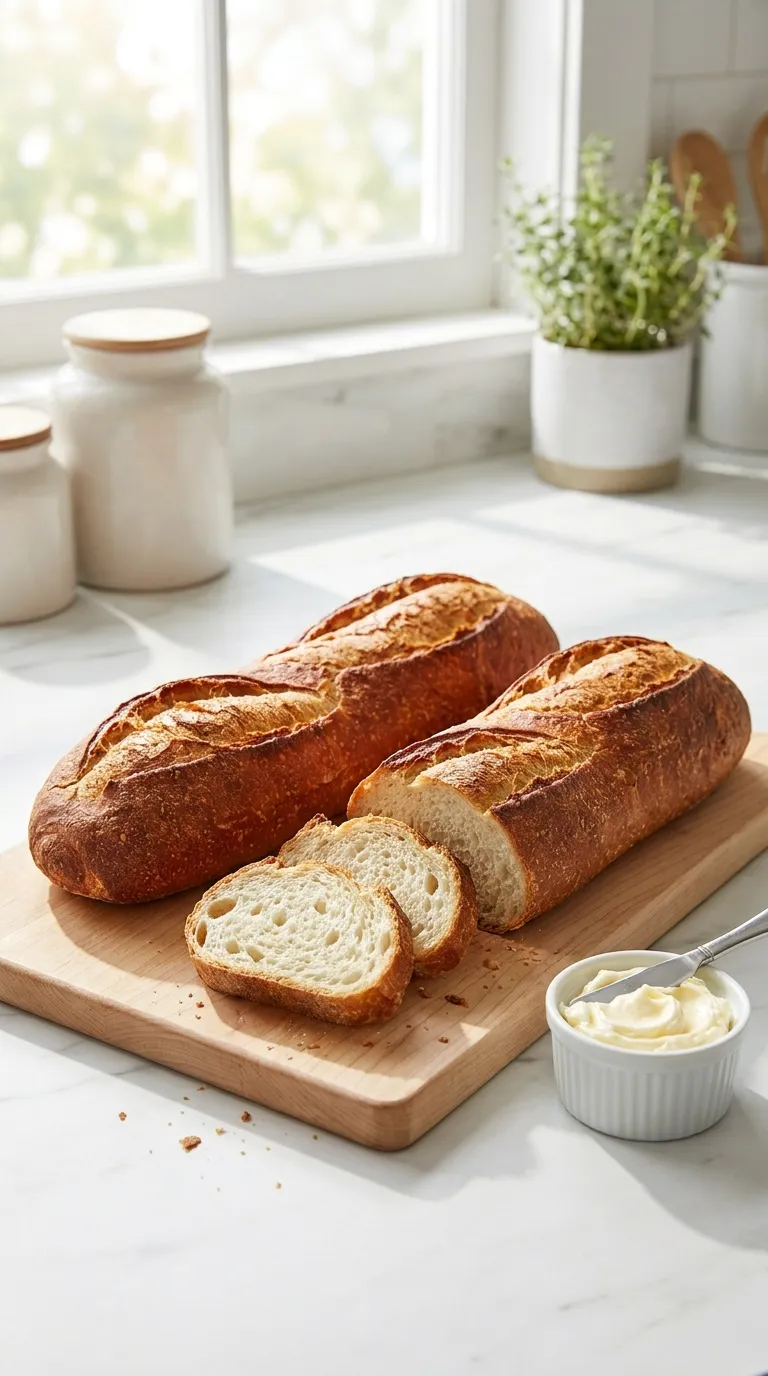
There is nothing quite like the crackle of a warm crust right out of the oven. This easy French bread recipe delivers that bakery-quality crunch and a soft, pillowy center every single time.
How to Make Homemade French Bread
Tackling yeast at home might sound a little scary.
I promise it is actually incredibly simple! The magic comes down to basic patience and letting the dough rise properly. You will love the rustic aroma that fills your kitchen as these golden loaves bake to absolute perfection.
Equipment
You do not need a fancy bakery setup to make this French bread recipe at home. A few basic tools will help you achieve the perfect rise and bake.
Ingredients
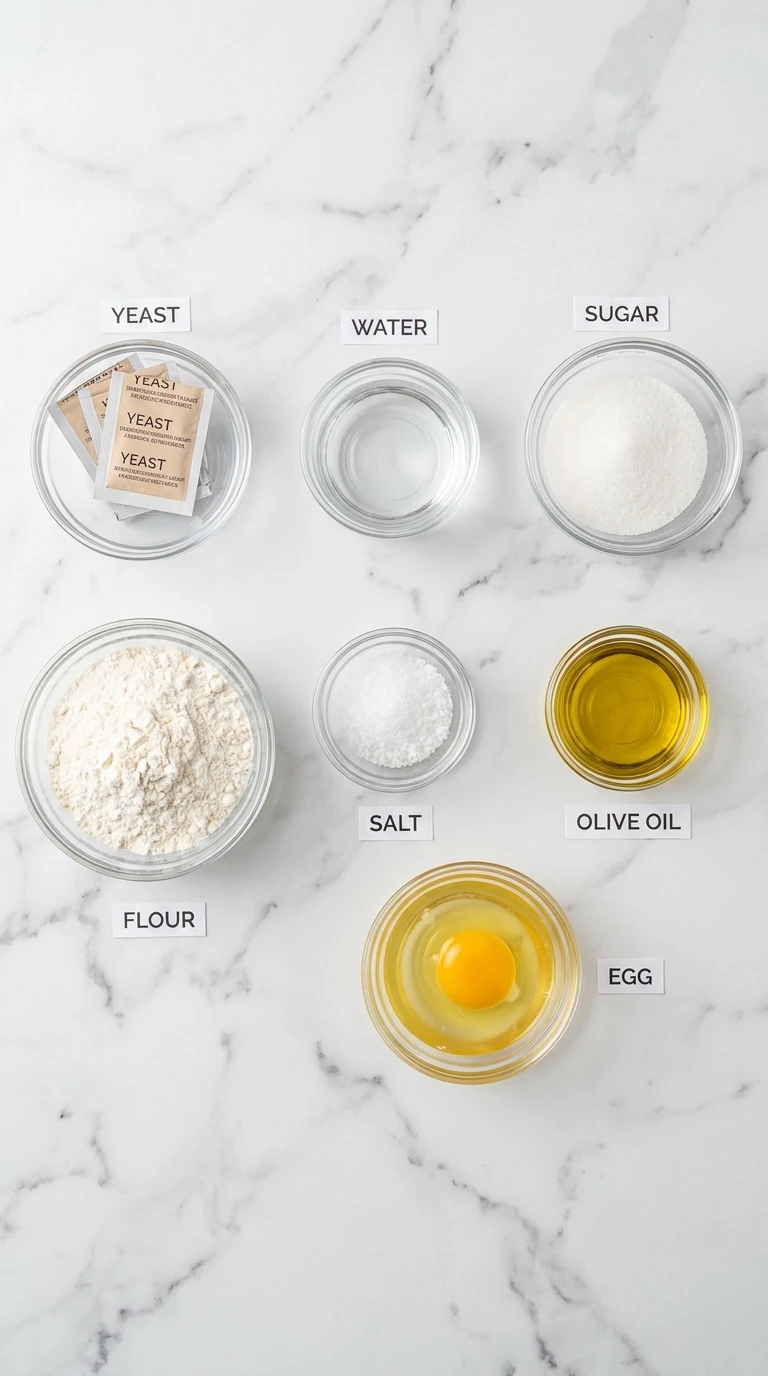
The beauty of this classic loaf lies in its simplicity. You likely have most of these pantry staples on hand right now.
The Essential Bread Base
Using warm water is crucial because it activates the yeast without killing it. Bread flour yields a chewier texture, but all-purpose flour works wonderfully for a softer crumb.
For the Ultimate Golden Crust (Egg Wash)
An egg wash gives the bread that iconic glossy finish. It also helps lock in moisture.
Instructions
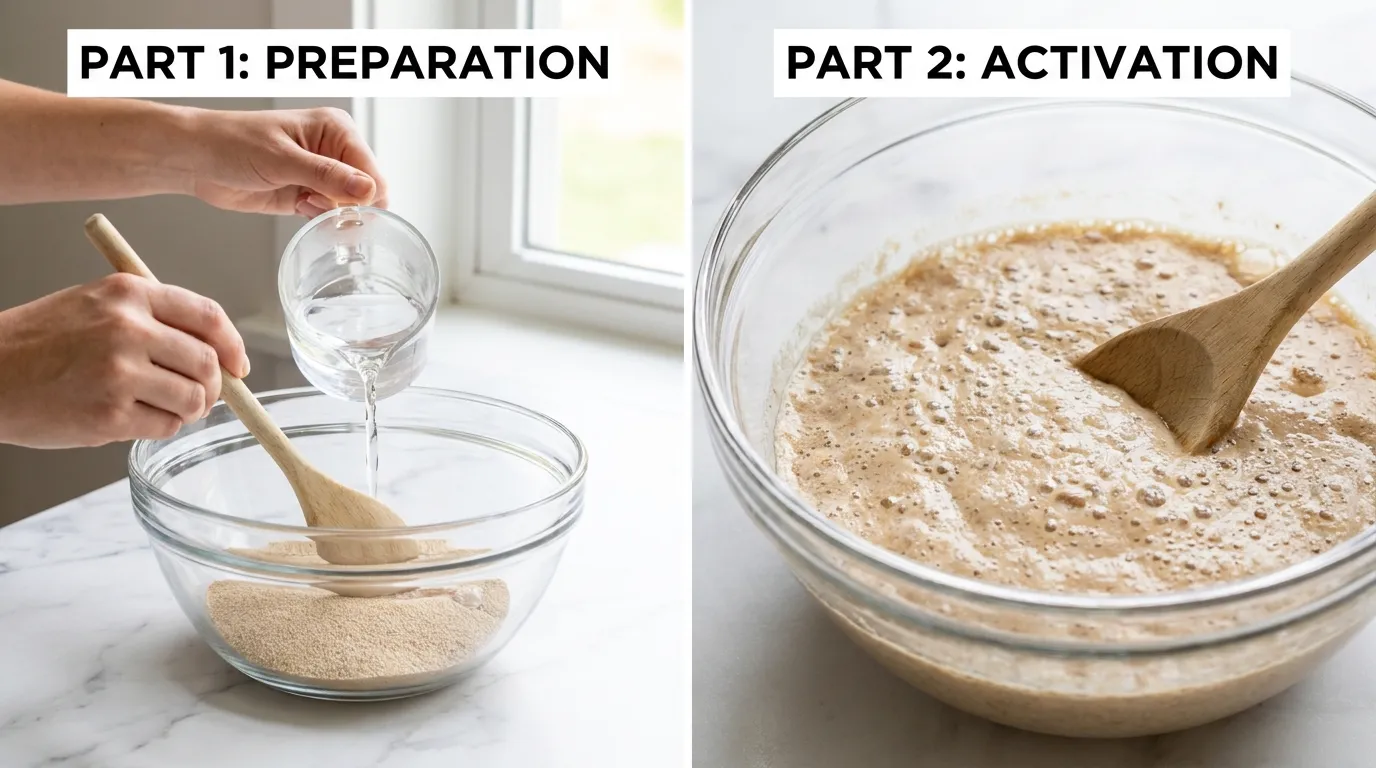
Step 1: Proof the Yeast in Warm Water
- Combine warm water, active dry yeast, and white sugar in a large bowl.
- Let the mixture sit until it looks thick and frothy.
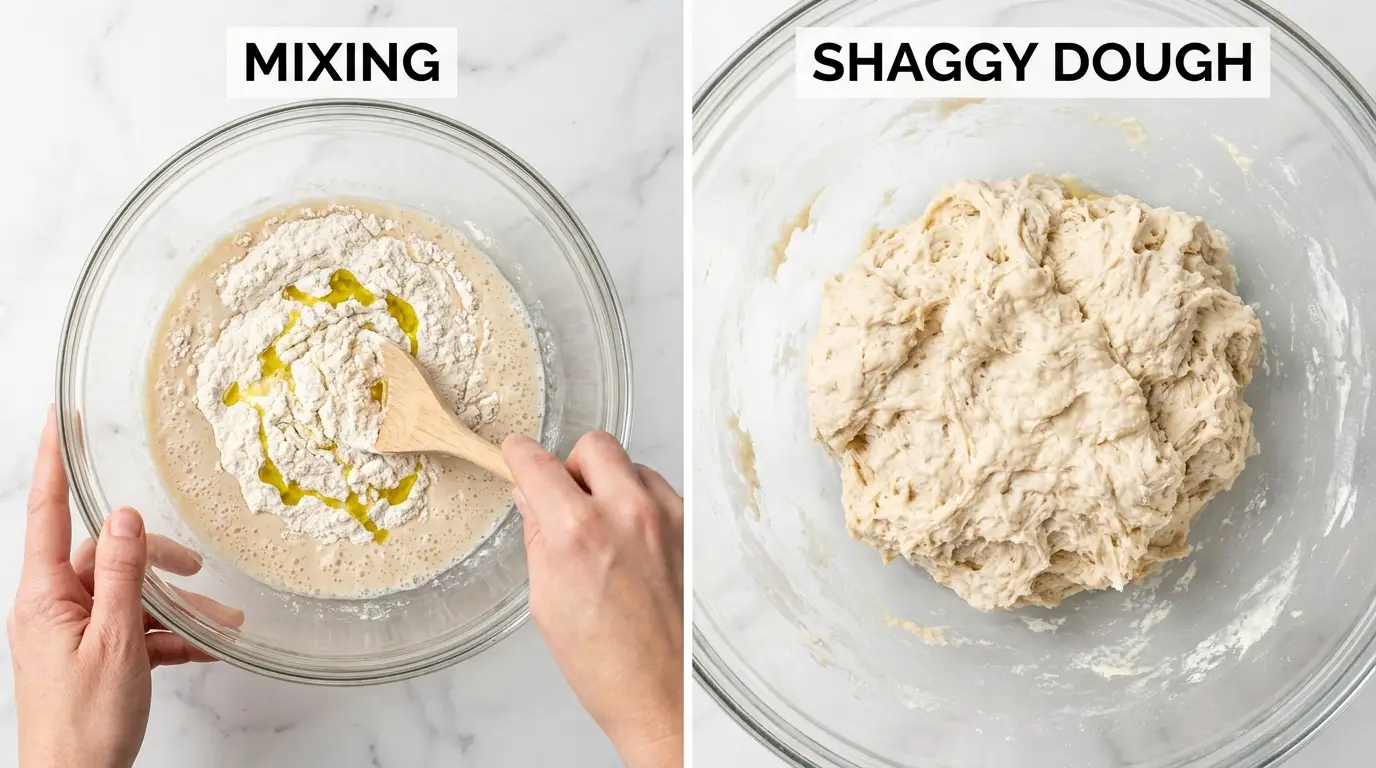
Step 2: Combine the Wet and Dry Ingredients
- Stir the olive oil, salt, and half of the flour into your yeast mixture.
- Gradually mix in the remaining flour until a shaggy dough begins to form.
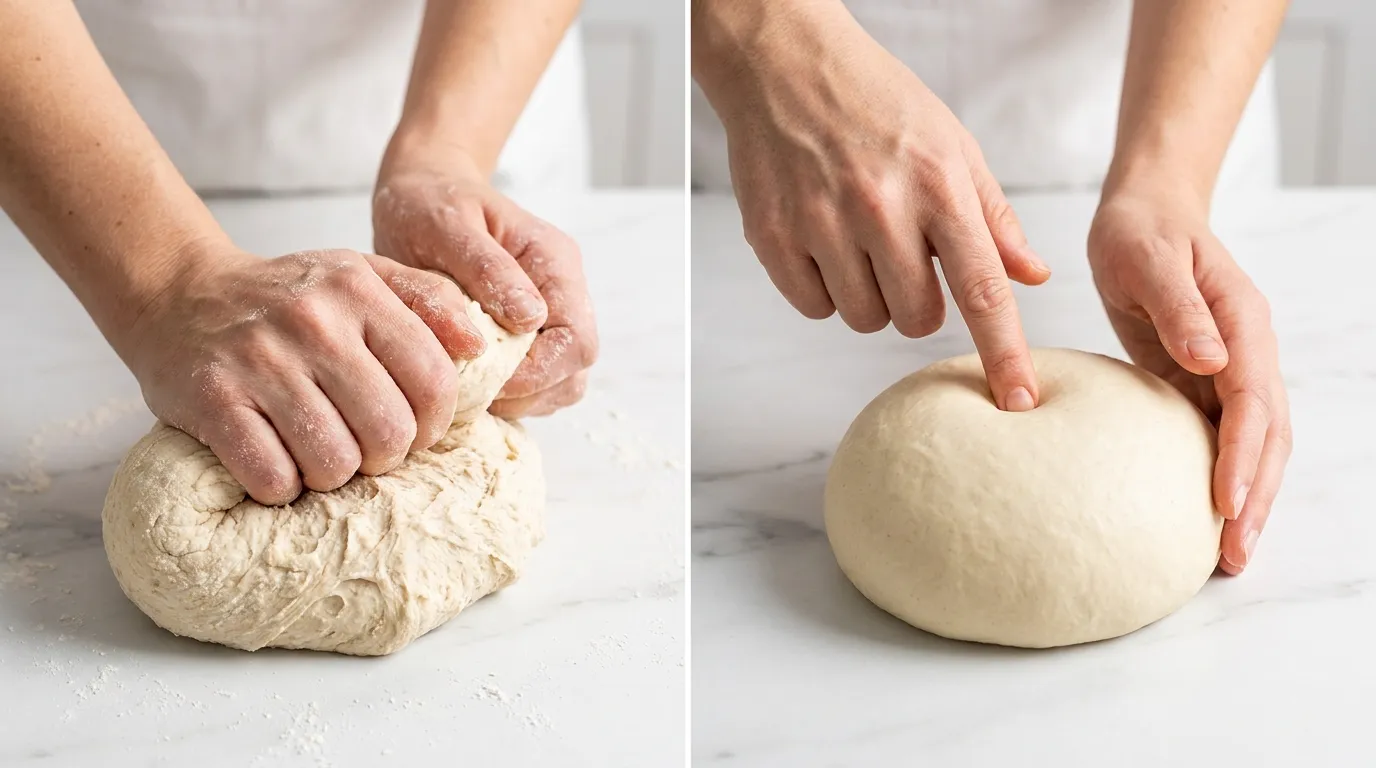
Step 3: Knead the Dough Until Smooth and Elastic
- Turn the dough out onto a lightly floured surface.
- Knead vigorously until the dough feels bouncy and springs back when poked lightly.
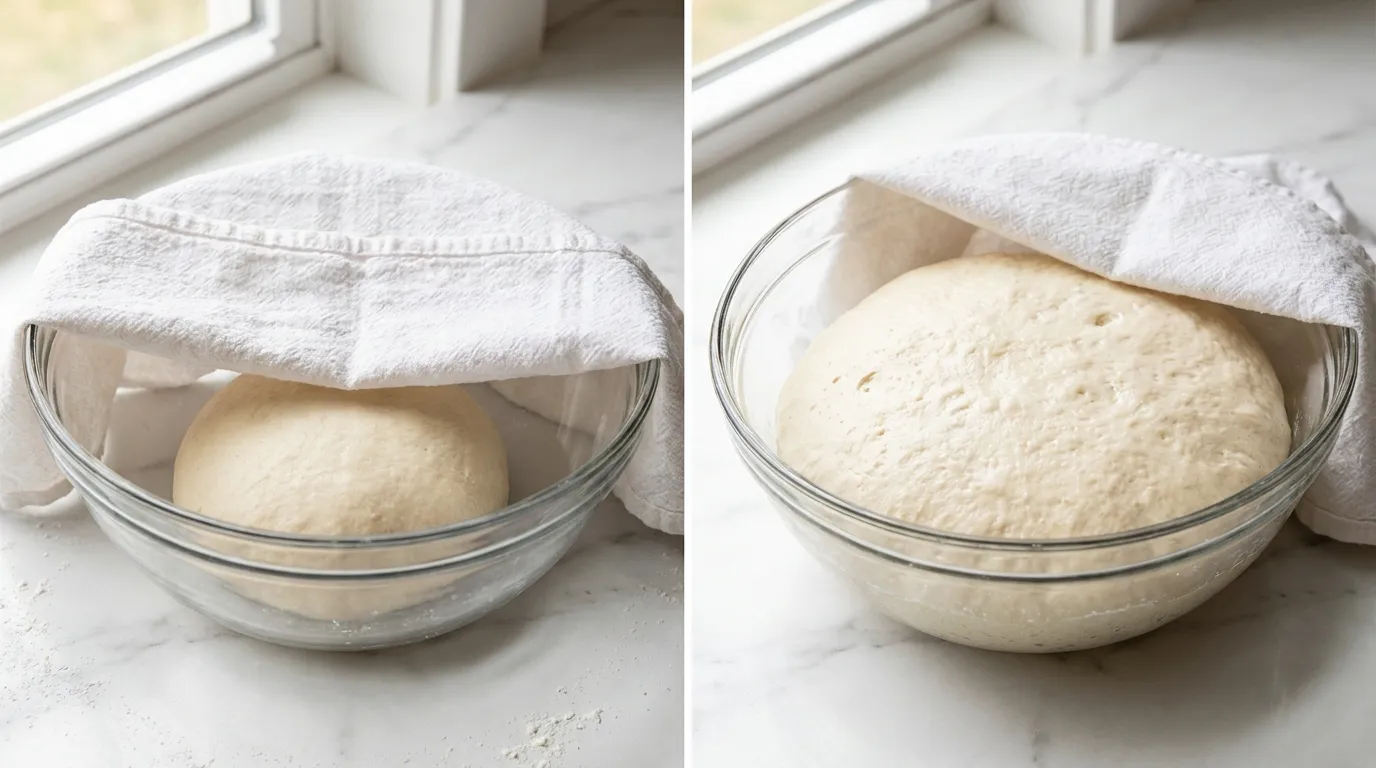
Step 4: Rest the Dough for the First Rise
- Place your kneaded dough into an oiled bowl.
- Cover with a damp towel and let it sit in a warm spot until it doubles in size.
Step 5: Divide and Shape the Loaves
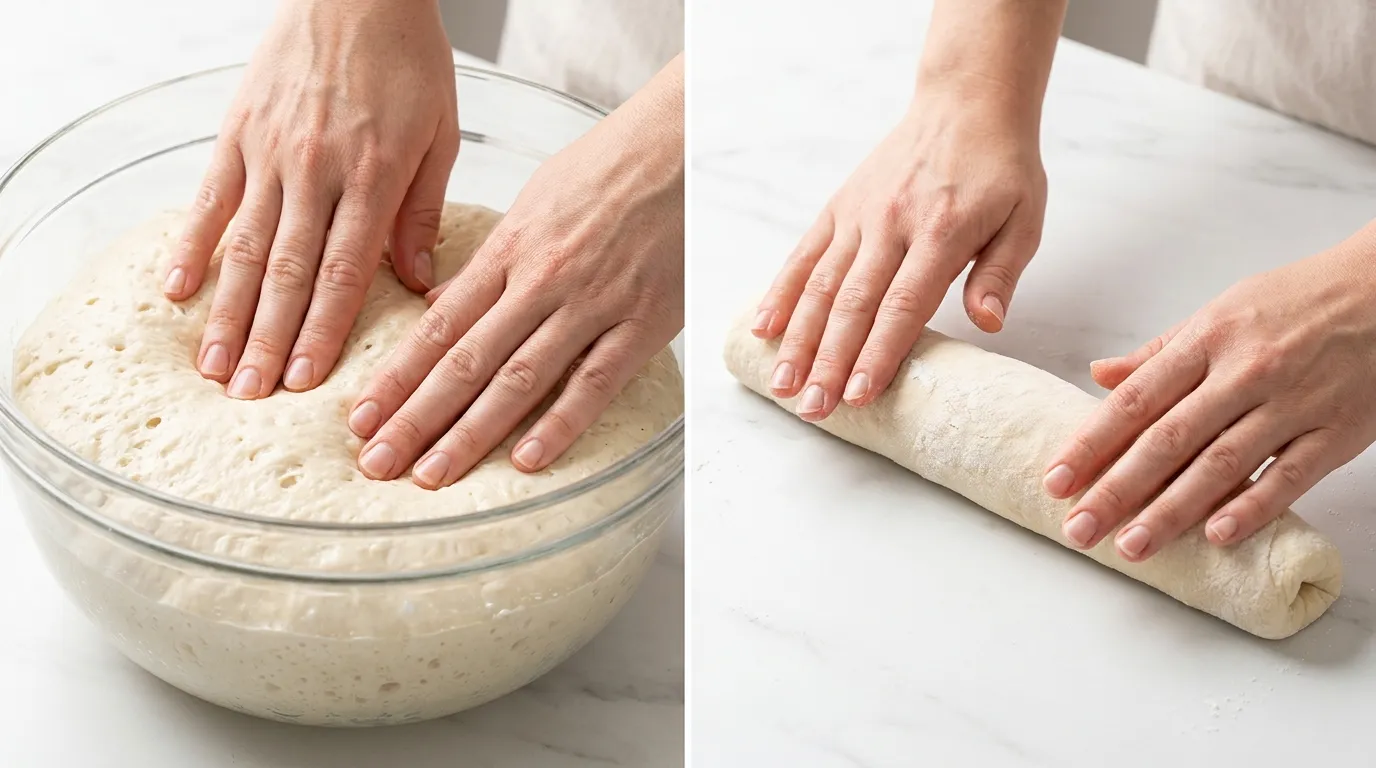
- Punch the risen dough down to release any trapped air.
- Divide the dough in half and roll each piece into a long, tight cylinder.
Step 6: Rest the Loaves for the Second Rise
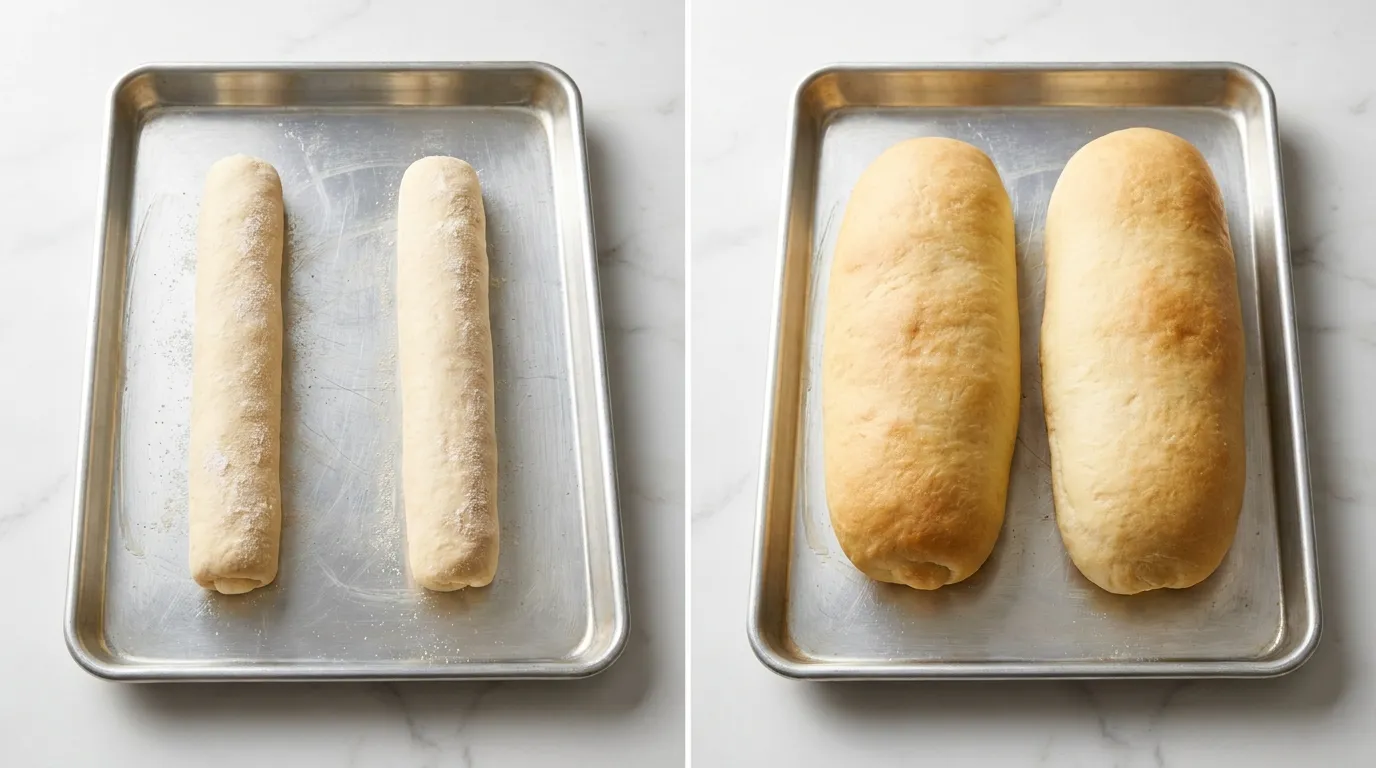
- Transfer your shaped loaves to a greased baking sheet.
- Cover lightly and let them puff up until they look wonderfully plump.
Step 7: Score the Top of the Dough
- Brush the beaten egg wash over the surface for a glossy bakery finish.
- Make shallow diagonal cuts across the top using a very sharp knife.
Step 8: Bake Until Golden and Hollow Sounding
- Bake in a preheated oven at 375 degrees Fahrenheit.
- Remove when the crust is deeply golden brown and the bottom sounds hollow when tapped.
Pro-Tips for a Bakery-Quality Crispy Crust
Creating steam in your oven is the absolute best way to achieve a professional, crackly crust. Steam keeps the outside of the dough pliable during the first few minutes of baking. This allows the bread to rise beautifully before the crust sets.
Try placing a shallow metal pan on the bottom rack of your oven while it preheats. Right after you put your French bread recipe in to bake, carefully pour a cup of ice cubes into the hot pan and quickly shut the door. The resulting burst of steam works pure magic on your loaf.
Delicious Flavor Variations (Garlic, Herb & Cheese)
Once you master this easy French bread recipe, you can customize it endlessly. Adding fresh flavors takes this simple loaf to an entirely new level.
Try mixing roasted garlic cloves and fresh rosemary directly into the dough during the kneading stage. For a cheesy twist, sprinkle grated parmesan and dried oregano over the egg wash right before baking. You can also brush the warm, freshly baked crust with melted garlic butter the second it comes out of the oven.
Common Bread-Making Mistakes to Avoid
Using water that is too hot will instantly kill your yeast. Aim for a temperature around 110 degrees Fahrenheit, which feels pleasantly warm to the touch. If the water is too cold, the yeast will simply take much longer to wake up.
Another common trap is skipping the full rise times. Baking is a game of patience. If your kitchen is slightly chilly, the dough will need more time to double in size. Always trust the visual cues over the clock.
Freezing & Storage Secrets
Homemade bread lacks the commercial preservatives found in store-bought loaves. This means it dries out a bit faster. Keep your cooled bread in a paper bag at room temperature to preserve that wonderful crust.
Never store your bread in the refrigerator. The cold environment actually makes the bread go stale faster! To freeze, slice the completely cooled loaf and wrap it tightly in aluminum foil. Place the wrapped slices in a heavy-duty freezer bag for up to three months.
Serving Suggestions: Best Pairings for Your Loaf
A fresh, warm slice of this bread practically begs for a thick layer of salted butter. It is the ultimate comfort food.
This sturdy loaf is absolutely perfect for soaking up rich pasta sauces or dunking into a steaming bowl of tomato soup. You can also slice it horizontally to create the most incredible sub sandwiches or epic garlic bread.
Nutrition Information (Per Slice)
*Nutrition values are estimates and may vary based on ingredients used and slice thickness.
Frequently Asked Questions
Can I make this dough ahead of time?
Yes! You can let the dough do its first rise in the refrigerator overnight. The cold slows down the yeast, which actually develops a much deeper flavor. Just let the dough come to room temperature before shaping it.
Why didn’t my bread dough rise?
The most common culprit is dead yeast. Always check the expiration date on your yeast packets. Additionally, if your water was too hot, it may have killed the yeast during the proofing stage.
Do I have to use bread flour?
Not at all. This French bread recipe works wonderfully with standard all-purpose flour. Bread flour simply provides a slightly chewier texture due to its higher protein content.
How can I tell if I have kneaded the dough enough?
The dough should feel smooth, stretchy, and slightly tacky but not overwhelmingly sticky. If you poke it gently with your finger, the indentation should quickly spring back.
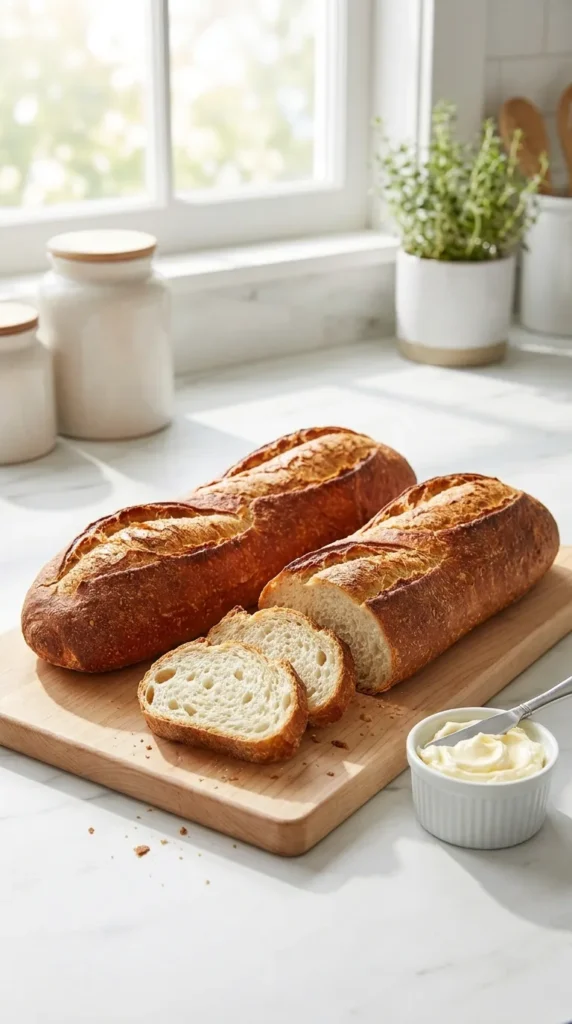
Homemade French Bread
AUTHOR: True Taste Buds
There is nothing quite like the crackle of a warm crust right out of the oven. This easy French bread recipe delivers that bakery-quality crunch and a soft, pillowy center every single time.
20 MINS
30 MINS
50 MINS
20
Ingredients
- 2 (0.25 ounce) packages active dry yeast
- 2 cups warm water
- 2 tablespoons white sugar
- 5 cups all-purpose flour, divided
- 1 tablespoon salt
- 2 tablespoons olive oil
- 1 egg, beaten
- 1 tablespoon cold water
Instructions
- Combine warm water, active dry yeast, and white sugar in a large bowl. Let the mixture sit until it looks thick and frothy.
- Stir the olive oil, salt, and half of the flour into your yeast mixture. Gradually mix in the remaining flour until a shaggy dough begins to form.
- Turn the dough out onto a lightly floured surface. Knead vigorously until the dough feels bouncy and springs back when poked lightly.
- Place your kneaded dough into an oiled bowl. Cover with a damp towel and let it sit in a warm spot until it doubles in size.
- Punch the risen dough down to release any trapped air. Divide the dough in half and roll each piece into a long, tight cylinder.
- Transfer your shaped loaves to a greased baking sheet. Cover lightly and let them puff up until they look wonderfully plump.
- Brush the beaten egg wash over the surface for a glossy bakery finish. Make shallow diagonal cuts across the top using a very sharp knife.
- Bake in a preheated oven at 375 degrees Fahrenheit. Remove when the crust is deeply golden brown and the bottom sounds hollow when tapped.