
The Secret to Flaky, Mile-High Biscuits (No Buttermilk Required!)
You wake up on a crisp weekend morning with a serious craving for comfort food. You open the fridge, ready to bake, only to realize the carton of buttermilk is completely empty. Panic sets in.
We have all been there. Thankfully, this Homemade Biscuits Without Buttermilk Recipe is going to save your breakfast plans right now. By using a simple trick with regular milk and a touch of acidic liquid, you can recreate that iconic tangy flavor and tender crumb. The homemade buttermilk substitute reacts beautifully with the leavening agents to give these biscuits an incredible lift. The resulting layers pull apart like delicate pastry sheets, ready to soak up a generous pat of butter. Your kitchen is going to smell exactly like a classic southern diner.
Why You’ll Break Up With Canned Biscuits Forever
I still remember anticipating the terrifying pop of the cardboard dough tube. For years, I relied on those overly processed cylinders because I thought making baked goods from scratch was too intimidating. They are fast. I will certainly give them that.
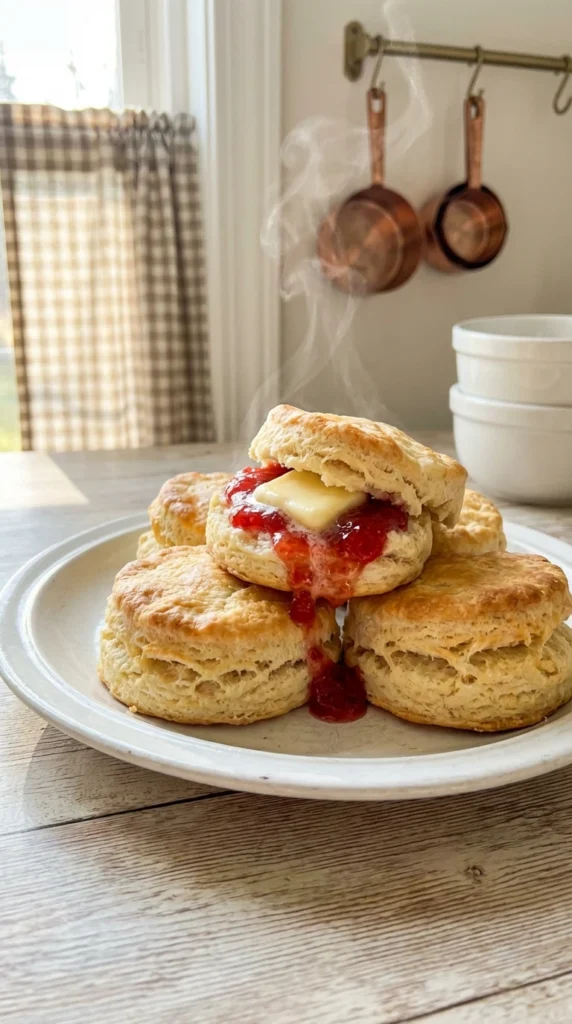
However, the flavor of store-bought dough always carries a weird metallic tang that lingers on your tongue. Once you taste the rich, buttery goodness of true from-scratch baking, you will never look at the refrigerated aisle the same way again. The golden tops crackle slightly when you take that first bite. Inside, the crumb remains incredibly soft, pillowy, and steaming hot. Making them is also surprisingly therapeutic. You just need a mixing bowl, cold butter, and your own two hands to create something spectacular.
The Magic of’No-Rise’Comfort Food: From Pantry to Plate in Under 30 Minutes
Time is rarely on our side when hunger suddenly strikes.
That is the true beauty of this quick baking method. There is no yeast to activate, no heavy kneading required, and absolutely no dough to proof. You literally just mix the components, cut out your circles, and slide the pan straight into a hot oven. In less time than it takes to brew a fresh pot of dark roast coffee, you will have a tray of piping hot biscuits ready to be smothered in sweet strawberry jam or savory sausage gravy. I honestly cannot count the number of times this speedy process has rescued a disorganized dinner party or a lazy Sunday brunch. Grab your basic pantry staples and get ready to enjoy pure comfort food in an absolute flash.
Ingredients
The Core 5: Building the Ultimate Dough from Scratch
Every great biscuit starts with a reliable foundation of basic pantry items. Flour provides the necessary structure to hold those flaky layers together. Baking powder is the heavy lifter here, ensuring your biscuits rise tall and proud. A touch of sugar encourages beautiful golden browning on top, while salt enhances the overall savory flavor.
It really is that simple.

The Great Fat Debate: Cold Butter vs. Shortening for the Best Flake
The temperature of your fat is the single most important detail here.
I strongly prefer unsalted butter because the rich flavor is simply unmatched. While shortening can absolutely make a biscuit tender, butter actually contains water. That water rapidly turns into steam in the hot oven, pushing the layers of dough apart to create an incredibly flaky texture. Make sure your butter is straight out of the fridge or even pop it in the freezer for ten minutes before you begin.
The Liquid Hack: Getting That Signature Tang Without Buttermilk
This is the secret weapon for our Homemade Biscuits Without Buttermilk Recipe.
We are going to make our own sour milk right on the kitchen counter in about five minutes. You just combine regular whole milk with a splash of white vinegar or fresh lemon juice. As the mixture sits, it will curdle slightly and thicken up perfectly. This highly acidic liquid reacts instantly with the baking powder to give your dough an explosive lift and that iconic southern tang.
Equipment
You do not need an electric mixer or any fancy gadgets to bake these beauties.
In fact, mixing by hand prevents you from overworking the dough. Gather a few basic tools to make the process completely seamless.
- Large mixing bowl
- Pastry blender (or two dinner forks)
- Measuring cups
- Measuring spoons
- Round biscuit cutter (or the rim of a drinking glass)
- Baking sheet
- Parchment paper
Instructions
Step 1: Prepping the Dry Base (It’s All About the Leaveners)
Before you get your hands floury, go ahead and preheat your oven to 425 degrees Fahrenheit. A screaming hot oven is mandatory for a tall biscuit.
Grab your largest mixing bowl. You want plenty of room to toss the ingredients without creating a cloud of flour on your kitchen counter. Dump in the all-purpose flour, baking powder, sugar, and salt. Take a wire whisk and stir everything together vigorously for about thirty seconds. This distributes the leavening agent evenly so your biscuits rise straight up instead of leaning to one side.
- Preheat oven to 425 F and line a baking sheet with parchment paper.
- Measure the milk in a glass and stir in the vinegar. Let it sit to curdle.
- Whisk flour, baking powder, sugar, and salt in a large bowl.

Step 2: The’Pea-Sized’Butter Technique for Maximum Flakiness
This is where the magic truly happens.
Take your icy cold butter cubes and drop them into the dry flour mixture. Toss them around gently until every piece is coated. Using a pastry blender or two dinner forks, begin cutting the butter into the flour. You want to press down and twist slightly. Keep going until the mixture looks like coarse, wet sand with several larger chunks of butter still visible. Those larger, pea-sized pieces will melt in the oven and create the pockets of steam needed for flakiness.
- Toss cold butter cubes in the flour to coat.
- Cut the butter into the flour until crumbly.
- Leave some butter pieces the size of small peas.

Step 3: The Smash-and-Fold Method: Creating Those Epic Pull-Apart Layers
Now it is time to bring the dough together. Pour your homemade sour milk mixture into the center of the bowl.
Use a rubber spatula or a wooden spoon to stir the liquid into the flour. Stop mixing as soon as the dough looks shaggy and starts pulling away from the sides. Turn this shaggy mess out onto a clean, lightly floured surface. Gently pat it out into a rough rectangle. Now, fold one side into the center, and fold the other side over that. You are basically folding it like a business letter. Turn the dough ninety degrees and repeat this folding process two more times. This simple smash-and-fold technique literally stacks sheets of butter and dough on top of each other.
- Pour the curdled milk into the dry ingredients.
- Mix gently until a shaggy dough forms.
- Turn out onto a floured surface and pat into a rectangle.
- Fold the dough into thirds, repeat two more times.

Step 4: Stamping the Dough (The One Twisting Mistake That Ruins the Rise!)
After your final fold, pat the dough down until it is about one inch thick. Do not use a rolling pin.
Using a rolling pin compresses the delicate layers you just spent time building. Just use your hands to press it flat. Take a sharp round biscuit cutter and press it straight down into the dough. Pull it straight back up. Whatever you do, absolutely do not twist the cutter. Twisting seals the edges of the dough together, locking the layers in place so they cannot rise in the oven. Cut as many circles as you can, then gently gather the scraps to cut the remaining biscuits.
- Pat dough to a one-inch thickness using your hands.
- Press a floured cutter straight down into the dough.
- Pull the cutter straight up without twisting.
Step 5: Baking to a Perfect Golden-Brown Finish
Transfer your stamped biscuits onto the prepared baking sheet.
If you prefer soft sides that require pulling apart, place them close together so they touch. If you want crispy edges all around, leave an inch of space between each one. Slide the pan into your preheated oven. Bake for twelve to fifteen minutes. You will know they are ready when your kitchen smells incredibly rich and the tops are a deep, beautiful golden brown. Pull them out and let them rest for just a couple of minutes before serving.
- Place biscuits on the parchment-lined baking sheet.
- Bake at 425 F for 12 to 15 minutes.
- Remove when the tops are deeply golden and risen.

The’Drop Biscuit’Shortcut for Ultra-Lazy Mornings
Sometimes you just do not have the energy to pat and fold dough on a floured counter. I completely understand.
If you are looking for an even faster Homemade Biscuits Without Buttermilk Recipe, you can easily convert this into a drop biscuit. Simply add an extra splash of regular milk to the dough until it resembles a thick, sticky batter. Grab a large cookie scoop or two spoons and drop rustic mounds directly onto your baking sheet. They will not have those defined, flaky layers, but they will still bake up wonderfully tender with crisp, craggy tops. It is the perfect rustic side dish for a hearty bowl of soup.
Gravy, Jam, or Honey? Perfect Pairings & Serving Ideas
A fresh biscuit is a blank canvas just waiting for the perfect topping.
For a sweet morning treat, you cannot beat a generous slathering of softened butter and a thick layer of homemade strawberry preserves. A drizzle of raw honey also works beautifully to highlight the savory notes of the dough. If you are serving a crowd for brunch, pour ladles of rich, peppery sausage gravy right over split open biscuits. They are sturdy enough to hold up to heavy sauces without turning to mush. You can even slice them in half and build an epic breakfast sandwich with folded eggs, melted cheddar cheese, and crispy bacon.
Freezing & Reheating Secrets: How to Have Fresh Biscuits Anytime
I always make a double batch of this recipe precisely for the freezer.
You can freeze them baked or unbaked. For unbaked dough, cut out your circles and place them on a baking sheet in the freezer. Once they are rock solid, transfer them to a freezer bag. You can bake them straight from frozen, just add a couple of extra minutes to the baking time. If you want to freeze leftover baked biscuits, wrap them tightly in foil. To reheat, place the foil-wrapped biscuits in a 350-degree oven for about ten minutes until they are steaming hot and soft inside again.
Troubleshooting: Why Didn’t My Biscuits Rise? (And Common Mistakes to Avoid)
Baking is science, and occasionally things do not go exactly according to plan.
If your biscuits turned out flat, check the expiration date on your baking powder. Inactive leaveners are the number one culprit for a poor rise. Another common mistake is letting the butter get too warm. If the butter melts before the pan hits the oven, you lose the steam that puffs up those delicate layers. Finally, remember the golden rule of cutting the dough. If you twist the biscuit cutter, you pinch the edges shut. Always press straight down and pull straight up for maximum height.
Nutritional Information (Per Biscuit)
*Estimates are based on a standard 8-biscuit yield using whole milk and butter.
Frequently Asked Questions
Can I use almond milk or oat milk instead of whole milk?
Yes, you can absolutely use dairy-free alternatives. Soy milk or oat milk mixed with vinegar works brilliantly because they have enough protein to curdle nicely. Almond milk is a bit thinner but will still activate the baking powder to give your biscuits a great lift.
What if I do not have a biscuit cutter?
Do not let the lack of tools stop you. You can easily use the rim of a drinking glass or a clean, empty soup can. Just make sure to dip the rim in flour before stamping. Alternatively, use a sharp knife to cut the dough into squares so you do not have any leftover scraps.
Can I prep this dough the night before?
I do not recommend letting the wet dough sit overnight in the fridge. The baking powder begins reacting as soon as it hits the liquid. If it sits too long, the reaction fizzles out, and your biscuits will bake up flat. It is better to prep the dry ingredients and cut in the butter ahead of time, then add the liquid right before baking.
Why are the bottoms of my biscuits burning?
A screaming hot oven can sometimes scorch the bottoms before the tops get golden. Try placing a second baking sheet directly underneath your main baking sheet to diffuse the heat. Also, placing your oven rack in the upper third of the oven helps keep the bottoms perfectly brown instead of black.
Homemade Biscuits Without Buttermilk
AUTHOR: True Taste Buds
Recreate the iconic tangy flavor and tender crumb of classic southern buttermilk biscuits using a simple trick with regular milk and vinegar. These flaky, mile-high biscuits go from pantry to plate in under 30 minutes with no proofing required.
10 MINS
15 MINS
25 MINS
8
Ingredients
- 2 cups All-purpose flour
- 1 tablespoon Baking powder
- 1 tablespoon White sugar
- 1 teaspoon Salt
- 1/2 cup Unsalted butter, very cold and cut into cubes
- 1 cup Whole milk
- 1 tablespoon White vinegar
Instructions
- Preheat oven to 425 F and line a baking sheet with parchment paper. Measure the milk in a glass and stir in the vinegar. Let it sit to curdle. Whisk flour, baking powder, sugar, and salt in a large bowl.
- Toss cold butter cubes in the flour to coat. Cut the butter into the flour until crumbly. Leave some butter pieces the size of small peas.
- Pour the curdled milk into the dry ingredients. Mix gently until a shaggy dough forms. Turn out onto a floured surface and pat into a rectangle. Fold the dough into thirds, repeat two more times.
- Pat dough to a one-inch thickness using your hands. Press a floured cutter straight down into the dough. Pull the cutter straight up without twisting.
- Place biscuits on the parchment-lined baking sheet. Bake at 425 F for 12 to 15 minutes. Remove when the tops are deeply golden and risen.